
If you’ve ever cruised along California’s coastline, you may have wondered: are e-bikes allowed on California beaches?
With more people swapping traditional bikes for electric models, questions about legality, safety, and where you can ride have become increasingly common.
Coastal paths and beachside trails are popular spots for e-bike riders, but rules vary widely depending on the city, the type of path, and even the e-bike class you’re using.
The growing popularity of e-bikes means more riders are sharing space with pedestrians, joggers, and fellow cyclists. Local shops like Beachside Bikes can help you choose the right e-bike, ensure it meets safety requirements, and give you accurate tips for riding coastal paths responsibly.
In this guide, we’ll break down the rules, classifications, and restrictions so you can confidently navigate California’s beaches and coastal bike paths on your e-bike.
Are E-Bikes Allowed on California Beaches?
The short answer is: it depends on where and how you ride. E-bikes are generally allowed in many coastal areas in California, but access is controlled by a mix of state law and local beach regulations. What’s permitted in one beach city may be restricted just a few miles away.
Most rules come down to two key distinctions:
- Riding on beach paths and boardwalks: Many California beach bike paths allow e-bikes, often with restrictions based on e-bike class, speed limits, and local ordinances.
- Riding on the sand: E-bikes are typically not allowed on beach sand except for authorized or maintenance use.
Since e-bikes can easily get damaged in sand, it’s wise to make sure your bike is ready for coastal riding. Beachside Bikes offer maintenance, advice, and accessories that help keep your e-bike safe when transitioning between paved paths and sandy areas.
Understanding California’s E-Bike Classification System
To know where e-bikes are allowed on California beaches and beach paths, it helps to understand how the state classifies electric bicycles. California law defines e-bikes based on how the motor assists the rider and how fast the bike can go.
These definitions affect where each type can legally be ridden, including on paved multi-use paths near beaches like The Strand, bike lanes, and shared public spaces.
California recognizes three main classes of e-bikes.
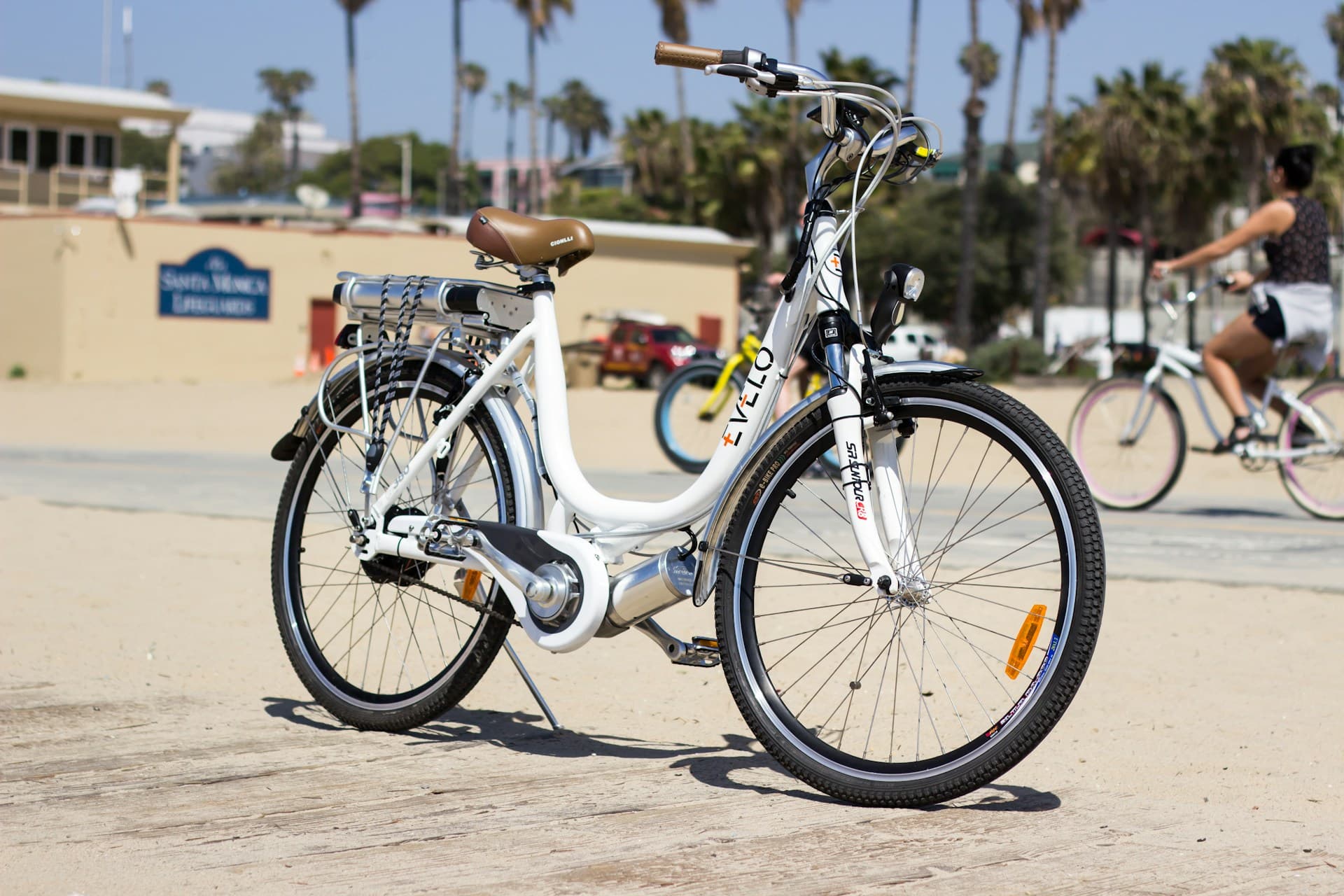
- Class 1 E-Bikes: E-bikes that provide electric assistance only when you’re pedaling and stop assisting at 20 mph. These are often considered the most widely accepted for shared bike paths.
- Class 2 E-Bikes: E-bikes with a throttle mode that can propel the bike without pedaling, but the motor assistance still ends at 20 mph. These are also commonly permitted on many paved bike paths where traditional bicycles are allowed.
- Class 3 E-Bikes: E-bikes that provide pedal-assist only and stop assisting at 28 mph. These typically must have a speedometer and come with additional equipment/helmet requirements. Due to higher speeds, many cities restrict Class 3 bikes on certain bike paths and multi-use recreational trails.
All three classes must meet basic legal requirements (like motor power under 750 W and functional pedals) to be recognized as e-bikes under California law.
Understanding these classifications helps you know which e-bike might be allowed on beach bike paths, shared coastal trails, and other local routes, since local authorities often use class definitions to set access rules.
California State Law vs Local Beach Regulations
In California, state law sets the baseline for where e-bikes can operate, but it does not guarantee access everywhere, especially near the coast.
While California recognizes e-bikes as bicycles under the Vehicle Code, local cities and beach authorities have the final say on where you can ride near beaches. That means even if your e-bike is legal under state law, a specific beach, boardwalk, or coastal path may still restrict its use.
Rules often vary based on safety concerns, pedestrian traffic, and how busy an area gets throughout the year. When you’re riding near California beaches, it’s important to know that posted signs, city ordinances, and local enforcement policies matter just as much as statewide e-bike laws.
Checking local beach regulations before you ride helps you avoid fines, warnings, or being asked to walk your e-bike.
Are E-Bikes Allowed on the Sand?
In most cases, e-bikes are not allowed on beach sand in California. Public beaches are primarily pedestrian spaces, and riding any motorized or electric bike directly on the sand is usually prohibited unless you’re authorized for official use.
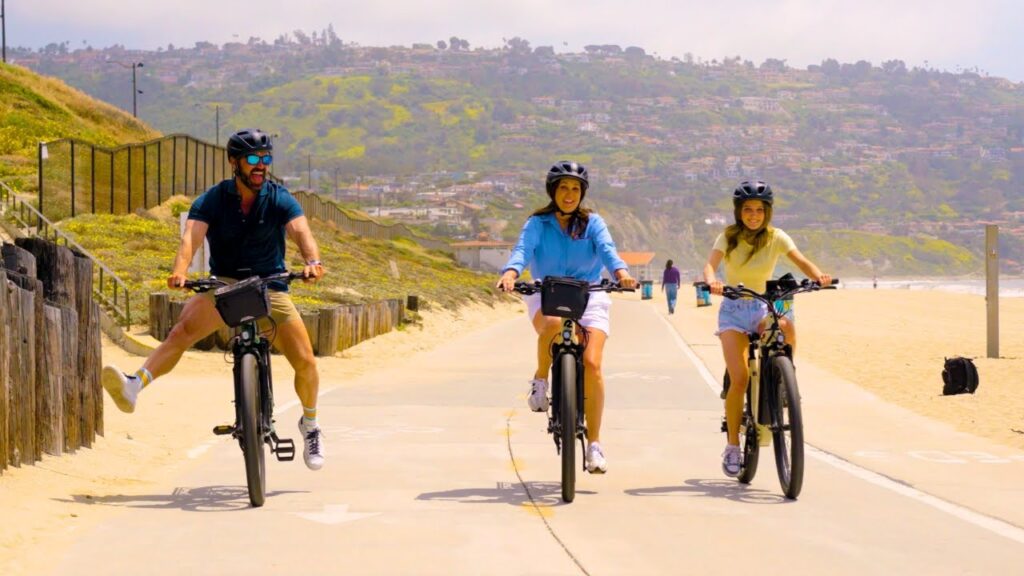
Even where traditional bicycles may occasionally be tolerated, e-bikes face stricter limits due to safety, environmental impact, and enforcement concerns. You should expect to walk your e-bike when crossing sandy areas to access paved beach paths or boardwalks.
Restrictions are commonly based on concerns such as:
- Pedestrian safety, especially in crowded beach zones
- Environmental protection, including damage to sand dunes and coastal habitats
- Equipment strain, since sand can quickly damage motors, chains, and drivetrains
If you’re riding near California beaches, it’s best to stick to designated beach bike paths and paved coastal trails and avoid riding your e-bike directly on the sand unless local signage clearly allows it.
Are E-Bikes Allowed on Beach Bike Paths and Boardwalks?
E-bikes are often allowed on California beach bike paths, but access is usually tied to how the path is classified and how busy it gets.
Many coastal paths are designated as multi-use recreational routes, which means you’re sharing space with pedestrians, traditional cyclists, runners, and families. Because of that, cities frequently limit which e-bike classes are permitted and may enforce lower speed limits than what state law allows elsewhere.
In high-traffic beach areas, you may also encounter posted rules that change by time of day, season, or crowd levels. Boardwalk-style paths and promenades tend to be more restrictive than wider paved trails, especially during peak hours.
Even when e-bikes are allowed, you’re expected to ride cautiously, yield to foot traffic, and reduce speed.
Adhering to posted signage and local rules helps keep beach paths accessible for everyone and reduces the risk of tickets or fines.
E-Bike Rules on Popular California Beach Paths
When riding an e-bike near California beaches, rules can vary widely depending on the city and the type of path. Knowing the rules will help you avoid fines.
Santa Monica Beach Bike Path
In Santa Monica, Class 1 and Class 2 e-bikes (those that assist up to 20 mph) are allowed on the beach bike path but Class 3 e-bikes are not permitted on that route. The city’s beach bike path carries heavy mixed traffic of walkers, joggers, and cyclists, so law enforcement and posted signs often emphasize speed control and safe passing etiquette.
Manhattan Beach (Marvin Braude Bike Trail & The Strand)
In Manhattan Beach, local ordinances place strict rules on e-bike and bicycle operation along beachside routes. The Marvin Braude Bike Trail (Beach Bike Path) has a posted limit of 15 mph, and riders must follow all local safety rules.
The Strand (not to be confused with the bike path) is a raised pedestrian walkway that runs parallel to the beach bike path and is reserved for walking and running only. Riding bikes or e-bikes on The Strand, as well as on sidewalks, plazas, and grass is prohibited.
Even though e-bikes are recognized under California law, local rules may restrict where you can use electric assist. A frequent rider mistake is assuming that because you see others cruising at higher speeds, it’s permitted; enforcement officers regularly monitor speed and location compliance, especially in high-traffic summer months.
Hermosa Beach Strand & Bike Path
In Hermosa Beach, e-bike use is tightly regulated under the city’s updated municipal code. Class 1 and Class 2 e-bikes are allowed on designated bike paths, but riding on The Strand, Greenbelt, or Pier Plaza with the motor engaged is prohibited.You must ride safely, follow posted speed limits, and wear a helmet if you’re under 18.
Common mistakes include assuming you can motor through restricted zones, carrying passengers on a single e-bike seat, or riding under the influence. Violations may result in administrative citations or impoundment for juveniles. By staying aware of local rules, using the correct e-bike class, and respecting speed limits, you can enjoy Hermosa Beach’s bike paths safely while avoiding fines.
Redondo Beach Coastal Paths
Redondo Beach does not currently list specific e-bike restrictions for its beach boardwalk or coastal bike paths in municipal code, so you generally follow California state law treating e-bikes like regular bicycles unless signs or posted restrictions say otherwise.
That said, this can lead to confusion about speed enforcement and path etiquette, and a common mistake is not slowing down enough where pedestrian traffic is dense.
For best practice, obey posted speed limits and stay aware of signage that may prohibit riding in specific zones, such as near piers or pedestrian plazas. Use local bike paths responsibly and yield to pedestrians to avoid fines or warnings.
What Happens If You Ride an E-Bike Where It’s Not Allowed?
Riding an e-bike in areas where it’s not allowed can lead to serious consequences, both for your safety and legally. It’s important to understand the potential penalties before you ride in restricted zones.
- Fines and citations: Local authorities can issue tickets for riding e-bikes in prohibited areas, with fines varying by city.
- Confiscation or impoundment: In some cities, especially for juveniles, e-bikes can be temporarily impounded until fees are paid.
- Increased liability: If you cause an accident while riding in a restricted area, you could be held responsible for injuries or property damage.
- Insurance issues: Violating local e-bike laws may affect your insurance coverage in the event of a claim.
- Warnings or community service: Some municipalities may offer warnings or require remedial safety programs for first-time offenders.
With rules varying across Santa Monica, Manhattan Beach, Hermosa Beach, Redondo Beach, and other coastal areas, it can be tricky to know which e-bike class is allowed where. Your best bet is to rely on trusted local experts and service centers like Beachside Bikes to help you navigate local ordinances, choose the right e-bike for your favorite routes, and make sure your ride stays compliant with California laws.
Staying Compliant With California E-Bike Rules
Navigating California beaches on your e-bike is easier when you understand the rules.
So, are ebikes allowed on California beaches? For the most part, yes!
Most Class 1 and 2 e-bikes are allowed on California beach bike paths, and Beachside Bikes rents to hundreds of riders each year from Santa Monica to Manhattan Beach without issues.
That said, access can vary by city and location. You may need to slow down or walk your bike through high-traffic areas like piers, and Class 3 e-bikes often face stricter restrictions on shared paths.
Always follow posted signage and local ordinances to ride safely and avoid fines.
For expert e-bike service, repairs, and rentals near California beaches, Beachside Bikes has you covered. We handle everything from tune-ups to full repairs for bikes, e-bikes, and e-scooters, so you can enjoy your ride without worry.
Visit us to keep your ride safe, smooth, and ready for the coast.